

How to Apply for Independent Living
Covenant Team
Mar 23, 2026
Get the Guidance You Deserve, Right to Your Inbox
Whether you’re a caregiver, care professional, or individual seeking independence, We aim to keep you informed and inspired. Receive updates on services, events, and stories of hope by signing up to become a part of our email list below.
Navigating the path to independent living for an adult child can feel like trying to solve a complex puzzle with missing pieces. You know the goal is a life of greater autonomy and fulfillment, but the steps to get there are often unclear. While many individuals with I/DD receive care in family homes, many are ready for the next step, if they can find the right support.
Here are some clear, actionable steps you need to confidently navigate the application process in North Carolina:
Step 1: Identify Eligibility and the Right Programs
Before you can apply for independent living, you need to understand the landscape. In North Carolina, eligibility isn’t a single checkbox; it’s a combination of factors including disability type, income level, and housing status.
Start by exploring these key state and local resources:
- NC Department of Health and Human Services (NCDHHS): The NCDHHS offers an Independent Living Rehabilitation Program designed to help individuals with disabilities live more independently within their communities.
- North Carolina Housing Finance Agency (NCHFA): This agency manages several key rental assistance programs that can be crucial for securing affordable, accessible housing.
- Local Centers for Independent Living (CILs): These non-profit organizations are invaluable local hubs that provide peer-led support, information, and advocacy to help you find the right fit.
Some programs, like the Independent Living Initiative (ILI), have specific criteria, such as being at risk of homelessness or having an income below 60% of the Area Median Income. Understanding these details upfront saves significant time and effort.
Step 2: Gather the Necessary Documentation
Once you’ve identified potential programs, the next step is to assemble all required paperwork. Being prepared can prevent common delays. While each program has unique requirements, you should be ready to provide:
- Proof of Disability: A formal letter or documentation from a medical professional.
- Proof of Residency: Verification of U.S. citizenship or legal residency and proof of North Carolina residency.
- Financial Information: Documents showing all sources of income and assets, which helps determine eligibility for financial support.
- Proof of Housing Status: If applicable, documentation proving you are homeless or in an unstable housing situation.
Having an organized file with these documents ready will streamline every application you submit.
Step 3: Complete and Submit Your Application
With your research done and documents in hand, it’s time to apply. Pay close attention to the specific instructions for each program, some may use online portals, while others require paper forms.
Don’t hesitate to contact the agency directly if you have questions. A small clarification can prevent a major mistake. This process often feels overwhelming, but remember that you don’t have to navigate it alone. Partnering with a case management organization can provide the expert guidance needed to ensure every form is accurate and complete.
How Independent Living is Funded
A common question is, “How do you pay for independent living?” Many individuals in North Carolina utilize funding from the NC Innovations Waiver and Medicaid to cover services. These programs are specifically designed to support home, and community-based services, making them a cornerstone of many independent living plans.
Your Partner in Building an Independent Life
Applying for independent living is about opening a door to new possibilities. The process can be complex, but with the right guidance, it is entirely manageable.
At Covenant Case Management Services, we specialize in helping families navigate this journey. From identifying the right programs to coordinating care, our team provides the steady support you need.
Explore our comprehensive services to see how we can help your adult child achieve their goal of living a more independent and enriched life. Have questions or are you ready to get started? Contact our team today, and we’ll help guide you every step of the way.


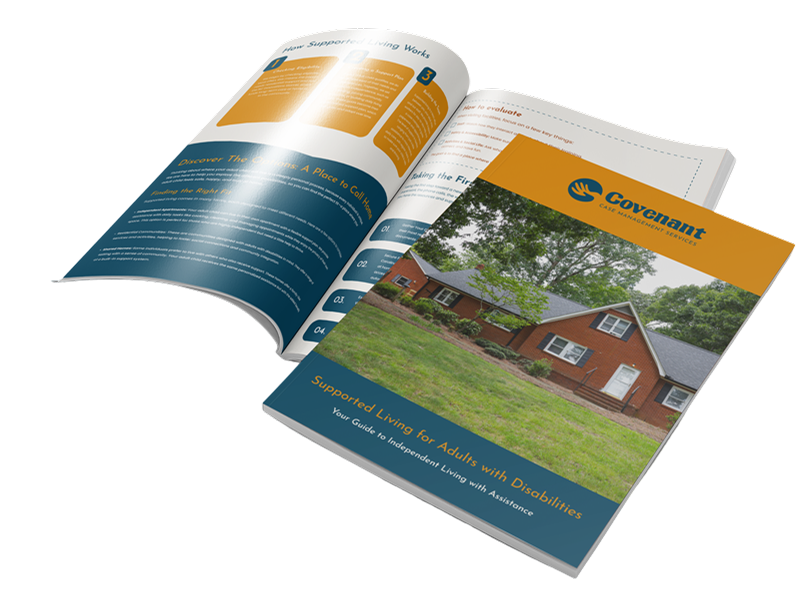
Download Your FREE Supported Living Guide!

Direct Support
Professionals

Individuals Served
Since 2010
