

How to Make Friends in an Independent Living Community
Get the Guidance You Deserve, Right to Your Inbox
Whether you’re a caregiver, care professional, or individual seeking independence, We aim to keep you informed and inspired. Receive updates on services, events, and stories of hope by signing up to become a part of our email list below.
Learning how to make friends in an independent living community can feel exciting and scary at the same time. For adults with IDD, supportive friendships help them feel safer and more confident. Relationships can turn a building into a real home and help your adult child practice independence in everyday life. This page offers simple, realistic ways to build connections through daily routines and community activities.
Quick Guide to Making Friends in an Independent Living Community
You make friends in an independent living community by joining independent living community events, spending time in shared spaces, and starting simple conversations. Encourage your adult child to try fun activities for disabled adults that match their interests. Over time, familiar faces can become trusted friends.
Below are 3 simple ways to action this:
- Get Involved and Be Present in Community Life
Showing up regularly is one of the most powerful ways to build friendships. When your adult child is present, others have more chances to notice them and connect.
Encourage your adult child to:
- Attend independent living community events such as game nights or movie nights. They can also try fitness classes or craft clubs that feel comfortable.
- Join interest groups like gardening or walking groups. Art or music clubs can support creativity and create natural conversation.
- Volunteer with other residents to support events or shared projects that matter to them.
- Spend time in common spaces, such as the dining room or lounge, instead of staying in their room alone.
- Be Proactive and Kind in Everyday Interactions
You do not need a big personality to make friends. Small, steady steps can open doors.
You can coach your adult child to:
- Use simple conversation starters like “Hello, I am [Name]. Are you new here?” or “Mind if I sit with you?”
- Make meals social by sitting with different people and inviting someone to join their table.
- Ask open questions about hobbies or favorite community events, then listen with care.
- Look for new residents who seem unsure and offer a friendly hello.
Remind them that it is okay to move slowly. Every small interaction counts.
- Practice Patience, Positivity, and Ask for Support
Deep friendships rarely happen overnight, especially after a big move. It helps to:
- Be patient with the process and remember that slow progress is still progress.
- Use small nonverbal signals like smiling, gentle eye contact, and regular greetings.
- Ask for help from family, staff, or a trusted peer to attend events together when nerves feel high.
How Covenant Can Support Your Adult Child’s Social Life
At Covenant, friendship and connection are part of how we support independence and purpose. Our residential and supported living programs, along with community-based services, help adults with IDD join activities, form friendships, and feel at home.
Learn more on our services page here: covenanttoserve.com/services/.
Take the Next Step Toward Community and Independence
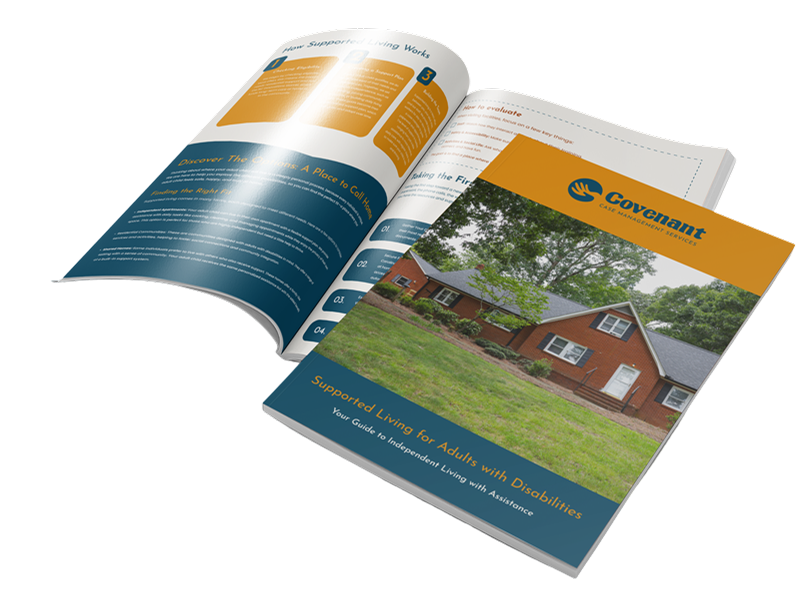
If you are ready to explore a more social and supported living option, we are here to walk with you. Download our Supported Living Guide to learn how to create a safe and connected life for your adult child.
Questions Families Ask About Making Friends in an Independent Living Community
How can my adult child make friends in an independent living community?
Three habits help: get involved and be present in community life, be proactive and kind in everyday interactions, and practice patience. Friendships grow from small, repeated moments, so consistency matters more than any single big gesture.
What activities help build friendships?
Regular, low-pressure activities create natural openings to connect:
- Attend community events
- Join an interest group
- Volunteer
- Spend time in shared spaces such as lounges and common areas
What are easy ways to start a conversation?
Use simple conversation starters and open questions, such as asking about a favorite show, hobby, or meal. Make meals social by sitting with others, and welcome new residents, since they are often looking for a friendly face too.
How long does it take to make friends after a move?
Deep friendships rarely happen overnight, especially after a big move. Slow progress is still progress. Celebrate small wins, such as a friendly greeting or a shared meal, and give your adult child time to settle in.
What if my adult child is shy or communicates nonverbally?
Friendship does not require many words. Nonverbal communication, such as a smile, a wave, or joining a shared activity, builds connection. Encourage your adult child to ask staff or trusted peers for support, and share their preferred ways of communicating with the team.
Who can help if making friends feels hard?
Staff and trusted peers are a good first stop. They can introduce your adult child to others, point out groups and events, and notice when extra encouragement would help. A case manager can also raise social goals in your adult child’s Individual Support Plan (ISP).
How can I support my adult child’s social life without stepping in too much?
Ask about their week, encourage activities they enjoy, and offer to attend a first event together. Practice greetings and conversation starters at home, then step back so friendships stay theirs. For more on everyday skills, read our guide to building independent living skills.
What is Community Networking?
Community Networking (UnityLink) is a person-centered service that helps individuals with IDD build meaningful connections and take part in everyday community life, through activities such as volunteering, visiting local parks, and attending classes and community events. Individuals enrolled in the NC Innovations Waiver can often add it to their existing service plan.
What if my adult child seems to spend more time alone than they would like?
Start with a calm conversation about what they want, then involve staff and their case manager. Options include new interest groups, volunteering, and structured community activities. Our Covenant Case Management Services team can help you explore supports that build connection and belonging.
How do I get started with Covenant Case Management Services?
Call (704) 780-4552 or contact our team. If you are ready to begin, use the Receive Services form. You can also download our free Supported Living Guide for expert insights and next steps.


Download Your FREE Supported Living Guide!

Direct Support
Professionals

Individuals Served
Since 2010
