

What is Supported Employment for Adults with IDD in North Carolina
Jul 8, 2026
Get the Guidance You Deserve, Right to Your Inbox
Whether you’re a caregiver, care professional, or individual seeking independence, We aim to keep you informed and inspired. Receive updates on services, events, and stories of hope by signing up to become a part of our email list below.
Supporting an adult child with an intellectual or developmental disability (IDD) often means thinking beyond today’s needs and planning for the future. One of the biggest questions many families ask is, “Will my loved one ever be able to have a job?” The answer is yes. For many adults with IDD, meaningful employment, specifically competitive integrated employment (CIE), is possible with the right supports.
Supported Employment is a service designed to help adults with IDD find, learn, and keep competitive jobs in their communities. Instead of expecting individuals to navigate the employment process alone, Supported Employment provides personalized guidance before, during, and after employment begins. From exploring career interests to on-the-job coaching, these services help individuals build confidence, develop valuable skills, and achieve greater independence.
Whether your loved one is preparing for their first job or looking for additional support to maintain employment, understanding how Supported Employment works in North Carolina, including recent state initiatives expanding access, can help you make informed decisions about the next steps..

What Is Supported Employment?
Supported Employment is a person-centered service that helps adults with intellectual and developmental disabilities obtain and maintain meaningful employment in integrated community settings. Rather than placing someone in a one-size-fits-all position, employment specialists work closely with the individual to identify their interests, strengths, abilities, and long-term goals.
The goal is competitive integrated employment (CIE): jobs where individuals with disabilities work alongside people without disabilities, earn at least minimum wage, and have the same access to advancement and workplace benefits as any other employee. CIE is also the term the North Carolina Department of Health and Human Services (NCDHHS) uses across its own employment initiatives, so you will see it throughout program materials and eligibility documents.
Support does not stop after someone is hired. Employment professionals continue working with both the employee and employer to help ensure long-term success. This ongoing guidance may include job coaching, workplace accommodations, communication strategies, transportation planning, and assistance navigating changes in job responsibilities.
Every employment journey looks different, which is why Supported Employment focuses on individualized planning rather than standardized programs.
Why Employment Matters for Adults with IDD
Employment provides far more than a paycheck. For many adults with IDD, having a job creates opportunities for independence, social connection, personal growth, and greater participation in the community.
The need is significant. Nationally, only about 16% of working-age adults with intellectual and developmental disabilities held individual, competitive integrated jobs in 2024, according to StateData research from Think Work. That gap is exactly why NCDHHS has made CIE a statewide priority through initiatives like Inclusion Works and Project Spark, covered below.
Meaningful work often helps individuals develop confidence in their abilities while strengthening everyday life skills like communication, time management, problem-solving, and teamwork. These experiences frequently carry over into other areas of life, helping people become more independent at home and in their communities.
Families also benefit. Watching an adult child build independence can provide reassurance that they are developing skills for the future. Employment can become an important part of a person’s long-term support plan, helping them establish routines, build relationships, and gain a stronger sense of purpose.
Supported Employment is not simply about finding work. It is about creating opportunities for people to live fuller, more self-directed lives.
Who Can Benefit from Supported Employment?
The NC Innovations Waiver can support both your adult child’s daily life and the caregiving structure arSupported Employment is designed for adults with intellectual and developmental disabilities who want to work but may need additional assistance to succeed in a community job.
Individuals who may benefit include people with:
- Intellectual disabilities
- Autism spectrum disorder
- Down syndrome
- Cerebral palsy
- Traumatic brain injuries (when appropriate services are available)
- Other developmental disabilities that create barriers to employment
Some individuals may need only occasional guidance after they are hired, while others benefit from ongoing job coaching. The level of support is based entirely on each person’s unique strengths, challenges, and employment goals.
Supported Employment is built around the belief that everyone has abilities worth contributing to the workforce.
How Supported Employment Works in North Carolina
North Carolina’s employment services move through three official phases, as defined by NCDHHS: pre-employment, employment stabilization, and long-term support.
Phase 1: Pre-Employment (Career Discovery and Job Development)
Everything begins with getting to know the individual. Employment specialists explore interests, preferred work environments, strengths, previous experiences, transportation needs, and long-term goals. This discovery process helps identify careers that are both realistic and personally meaningful. Pre-employment also includes job development: working with local businesses to identify opportunities that align with the individual’s skills, along with resume development, interview preparation, and application assistance.
Phase 2: Employment Stabilization (Job Coaching)
After employment begins, job coaches provide hands-on support in the workplace. Coaching may involve teaching job tasks, developing workplace routines, improving communication with supervisors, or helping coworkers understand effective ways to support the employee. As confidence and independence grow, coaching typically decreases while natural workplace supports become stronger.
Phase 3: Long-Term Support (Follow-Along)
Employment does not end once someone becomes comfortable in their role. Ongoing follow-along services help individuals adapt to new responsibilities, address workplace challenges, and continue building successful careers over time.
Services That May Be Included
Depending on an individual’s needs, Supported Employment services may include:
| Service | Purpose |
| Career exploration | Identify interests and employment goals |
| Job development | Connect individuals with employers |
| Resume and interview preparation | Improve hiring success |
| Job coaching | Learn job duties and workplace expectations |
| Workplace accommodations | Support long-term success |
| Transportation planning | Improve reliability getting to work |
| Employer education | Build inclusive workplaces |
| Ongoing employment support | Help maintain long-term employment |
Each support is tailored to the individual’s person-centered plan rather than following a standardized checklist.
How Is Supported Employment Funded?
Supported Employment in North Carolina is typically funded through one of three paths:
- NC Innovations Waiver: Many families receive Supported Employment through this Medicaid Home and Community-Based Services waiver, which funds a broad range of services for eligible individuals with IDD.
- NC Medicaid 1915(i) Services: If your loved one is on the NC Innovations Waiver waitlist and has NC Medicaid, 1915(i) services through your LME/MCO can provide similar supports, including job coaching, without affecting your place on the waitlist.
- State-Funded Supported Employment: For individuals without waiver or 1915(i) access, NCDHHS also defines Supported Employment as a state-funded service, delivered through the Division of Mental Health, Developmental Disabilities, and Substance Use Services (DMH/DD/SUS).
Supported Employment may also be coordinated alongside NC’s Division of Vocational Rehabilitation Services (DVRS), which provides additional vocational support for individuals with disabilities pursuing competitive employment.
Because every situation is unique, working with an experienced case manager can help families understand which funding sources may be available and how different services work together.
.png "What is Supported Employment for Adults with IDD in North Carolina 2")
NC Initiatives Expanding Employment Access
North Carolina has invested heavily in expanding CIE access in recent years:
- Inclusion Works: An NCDHHS initiative launched to help people with disabilities gain competitive integrated employment through coordinated state resources and employer partnerships.
- Project Spark: A newer NCDHHS initiative expanding CIE access to 10 additional locations across the state, announced in December 2025, to help more individuals with I/DD find and maintain competitive jobs.
These initiatives do not replace waiver or Medicaid-funded Supported Employment. They add state-level infrastructure and employer partnerships that make it easier for individuals to find and keep CIE jobs, regardless of funding source.
Supported Employment vs. Day Supports
Families sometimes confuse Supported Employment with Day Supports because both help adults with IDD remain active during the day. While they share similar goals of community inclusion and skill development, they serve different purposes.
Day Supports focus on structured activities that build daily living skills, social interaction, and community participation. Supported Employment focuses specifically on helping individuals obtain and maintain competitive employment in community businesses.
For some individuals, Day Supports may be the best fit. Others may transition from Day Supports into Supported Employment as their goals and abilities evolve. Some people even participate in both services depending on their individualized support plan.
Understanding these differences can help families choose services that best align with their loved one’s long-term goals.
A Note for Employers
Supported Employment is not only a family-facing service. Local employers play an essential role in making CIE possible. Partnering with a Supported Employment provider gives businesses access to a motivated, pre-screened candidate pool, along with training, coaching, and ongoing support designed to make the employment relationship successful for everyone involved.
How Families Can Get Started
The first step is simply having a conversation. Families should discuss employment goals with their care manager or support coordinator and determine whether Supported Employment may be appropriate.
If your loved one receives the NC Innovations Waiver, employment services can often be incorporated into their Person-Centered Plan. If they are not currently receiving waiver services, exploring eligibility for the Innovations Waiver, NC Medicaid 1915(i) services, or state-funded Supported Employment may be an important next step. DVRS can also be a starting point regardless of waiver status.
Choosing the right provider also matters. Look for organizations that prioritize individualized planning, community inclusion, employer partnerships, and ongoing support, not just job placement. Successful employment is built through relationships, thoughtful planning, and consistent guidance.
How Covenant Case Management Services Can Help
Navigating employment services, Medicaid programs, and waiver supports can feel overwhelming, especially when you are already balancing the responsibilities of caregiving. Covenant Case Management Services works alongside individuals and families throughout North Carolina to help simplify that process.
Our experienced care managers help families understand available services, coordinate supports, advocate during the planning process, and connect individuals with community resources that align with their goals. Whether your loved one is exploring employment for the first time or needs additional support maintaining a job, we are committed to helping you navigate the journey with confidence.
Every person’s path is different, and we are here to help ensure that path reflects their strengths, aspirations, and potential.
Frequently Asked Questions
Does NC Medicaid pay for Supported Employment?
Yes. Supported Employment can be funded through the NC Innovations Waiver, NC Medicaid 1915(i) services for individuals on the Innovations waitlist, or as a state-funded service through NCDHHS.
What is the difference between Supported Employment and Day Supports?
Supported Employment focuses specifically on helping individuals obtain and maintain competitive, integrated jobs in the community. Day Supports focuses on structured daily activities, life skills, and community participation. Some individuals use one service, some use both, depending on their Person-Centered Plan.
What are the three phases of Supported Employment in North Carolina?
NCDHHS defines three phases: pre-employment (career discovery and job development), employment stabilization (job coaching), and long-term support (ongoing follow-along).
Who provides Supported Employment services in North Carolina?
Services are delivered through NC Innovations Waiver providers, the NC Division of Vocational Rehabilitation Services (DVRS), and NCDHHS initiatives such as Inclusion Works and Project Spark.
How do I get started if my loved one is on the NC Innovations Waiver waitlist?
Ask your LME/MCO about NC Medicaid 1915(i) services, which can provide similar supports, including job coaching, without affecting your place on the Innovations waitlist.
How do I get my adult child started with Supported Employment in NC?
Start by talking with your care manager or support coordinator about your loved one’s employment goals. If they receive the NC Innovations Waiver, Supported Employment can often be added to their Person-Centered Plan.
Take the Next Step Toward Meaningful Employment
Employment can open doors to greater independence, confidence, financial stability, and community involvement for adults with intellectual and developmental disabilities. With individualized planning, the right supports, and experienced guidance, many individuals can achieve meaningful, competitive integrated employment that reflects their unique abilities and goals.
If you are exploring Supported Employment services, or want to understand how the NC Innovations Waiver, 1915(i), or state-funded options may support your loved one, Covenant Case Management Services is here to help.
Connect with CCMS or call (704) 780-4552 to talk with a care manager about your family’s next step.

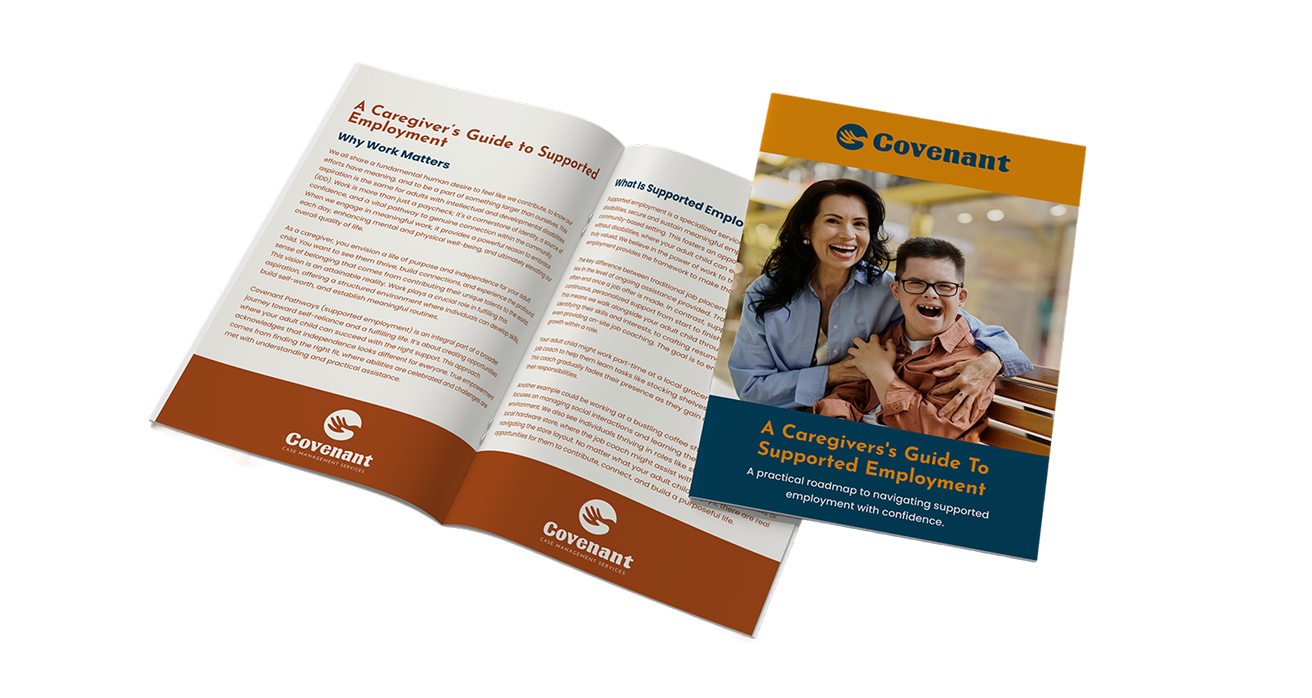
Download Your FREE Supported Employment Guide!

Direct Support
Professionals

Individuals Served
Since 2010
