
Free Family Guide
Supported Living for Adults with IDD in North Carolina
See what supported living really means, compare it with group homes and other options, and find out how to get started. Then download the full guide free.
Free Download
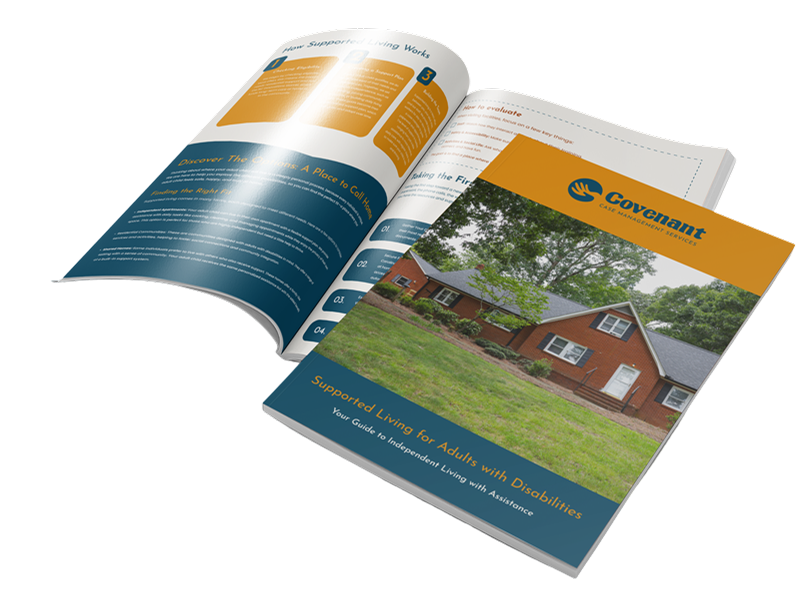
Get the Full Guide, Free
Everything below, plus checklists and NC-specific detail, in one guide you can save and share with the rest of your family.
- What supported living really means, and how it differs from group homes and Alternative Family Living.
- The benefits of supported living for adults with IDD and their families, from personal growth to stronger community connections.
- Eligibility, individualized planning, and the roles caregivers and case managers play.
- The different types of supported living arrangements, from an independent apartment to a shared home.
- NC-specific programs, including NC Innovations Waiver options and community-based resources.
Start Here
What Is Supported Living?
Supported living lets your adult child live in a home of their own, with exactly the support they need, not more, not less, while staying connected to family, work, and community.
Supported living is one of the home and community-based services available through North Carolina's Medicaid Innovations Waiver. Instead of moving into a staffed facility, your loved one keeps their own space and routines, and a support team comes to them based on a plan built around their actual goals. That support can include help with meal preparation, budgeting, medication reminders, transportation, and staying involved in the community, scaled up or down as independence grows.
NC Innovations Waiver. North Carolina's Medicaid Home and Community-Based Services waiver that funds supported living and other long-term supports for people with intellectual and developmental disabilities, in place of care in an institutional setting. Learn more from NC Medicaid.
What You'll Learn
What's Covered in the Free Guide
The full guide walks your family through each of these in plain language. Here's a preview of what's inside.
What Supported Living Means
How it compares to group homes and Alternative Family Living, and why the difference matters for your family's decision.
See the comparison →Eligibility & Funding
How the NC Innovations Waiver works, what Supported Living Levels I through III mean, and what to do if you're on the waitlist.
Check eligibility →Types of Arrangements
From an independent apartment to a shared home with a roommate, matched to your loved one's goals and support needs.
Explore living options →Caregiver & Case Manager Roles
What families, case managers, and support staff each contribute to a successful, person-centered plan.
Learn about case management →Eligibility & Funding
Who Qualifies for Supported Living?
Quick answerSupported living is available to adults with IDD who are enrolled in the NC Innovations Waiver and whose person-centered plan calls for Supported Living Level I, II, or III, based on their Supports Intensity Scale (SIS) score.
Supported Living Levels I, II, and III
NC Medicaid sets the level of support based on the person's SIS score and the details in their person-centered plan. Level I fits someone who needs occasional help managing their household. Level III fits someone who needs intensive, sometimes round-the-clock, support to live safely outside their family's home. The official NC Medicaid Supported Living Service Definition lays out exactly what's covered at each level, including a recent update that added remote support options.
Compare Your Options
How the Options Compare
| Feature | Supported Living | Group Home | Alternative Family Living |
|---|---|---|---|
| Where they live | Their own home or apartment | Shared residence with several other residents | In a trained caregiver's family home |
| Staffing | Flexes from on-call to 24/7, based on the plan | Staff on site around the clock | Live-in host family provides support |
| Independence | Highest; day-to-day routines set by the individual | More structured, shared house routines | Family-style structure with built-in relationships |
| Best fit for | Adults ready to manage most of daily life with backup support | Adults who benefit from consistent on-site staff and peer housemates | Adults who thrive with steady, relational, family-style support |
Getting Started
How to Move Forward
These are the three stages most families go through, and CCMS can help at any point.
Confirm Eligibility & Waiver Status
Talk with a case manager about your loved one's current NC Innovations Waiver status, or find out where they stand on the Registry of Unmet Needs if they're waitlisted.
Build a Person-Centered Plan
A Supports Intensity Scale assessment and planning meeting determine the right supported living level and what daily support should look like.
Transition & Start Services
Community Transition funding can help cover moving costs, and your support team monitors progress so the plan keeps working as independence grows.
Your Advocate
Why Families Partner with Covenant
Supported living works best when the plan behind it is built around your loved one, and stays flexible as their life changes. Here's what that looks like with our team.
- Person-centered planning. Every plan starts with your loved one's own goals, not a generic template.
- Statewide, CARF-accredited care. We serve families across 56 North Carolina counties as a CARF-accredited provider.
- One point of contact. A dedicated care coordinator helps you navigate the Innovations Waiver, providers, and paperwork.
- Support that grows with independence. Ongoing monitoring means the level of help adjusts as your loved one's needs change.

Our care coordinators and the individuals and families we serve, together.
Common Questions
Frequently Asked Questions
What is supported living for adults with IDD in North Carolina?
Supported living is a North Carolina Innovations Waiver service that helps adults with intellectual and developmental disabilities live in their own home or apartment while receiving the personalized support they need with daily tasks, health routines, and community life. Support is built around each person's plan and can flex from occasional check-ins to around-the-clock help.
How is supported living different from a group home?
In supported living, your adult child keeps their own home or apartment and staff come to them based on their individual plan. In a group home, several adults with IDD live together in one licensed residence with staff on site around the clock. Supported living generally suits someone ready for more autonomy, while a group home offers a more structured, staffed environment.
Who pays for supported living services in NC?
Supported living is funded through the NC Innovations Waiver, a Medicaid Home and Community-Based Services waiver. If your loved one is on the Innovations Waiver waitlist, known as the Registry of Unmet Needs, NC Medicaid 1915(i) services can provide similar support in the meantime without affecting their place on the list.
What are Supported Living Levels I, II, and III?
NC Innovations assigns a supported living level based on the person's Supports Intensity Scale (SIS) score, which measures how much daily support they need. Level I involves the lightest support, and Level III the most intensive, including options for 24 hour care for people who live independently from family and need that level of help.
How do I know if my adult child is ready for supported living?
Families often start considering supported living when their adult child wants more independence and can manage or learn daily routines with periodic support, such as budgeting, cooking, or medication reminders. A case manager can assess readiness through a person-centered planning process and help you weigh supported living against other options like a group home or Alternative Family Living.
Go Deeper
More Resources
Official NC Medicaid Resources
Primary sources for the eligibility details above.
Related from Covenant

Our Promise
Independence Is Just the Beginning
Supported living isn't the finish line. It's a foundation. As your loved one grows more confident, we adjust their plan so their home always fits who they're becoming.
Ready to Talk?
Let's Find the Right Fit Together
Whether you're just exploring supported living or ready to apply for the NC Innovations Waiver, our care coordinators can walk you through it, county by county, step by step.