

Independent Living Programs for Adults with Disabilities: A Family Guide
Covenant Team
Jul 6, 2026
Get the Guidance You Deserve, Right to Your Inbox
Whether you’re a caregiver, care professional, or individual seeking independence, We aim to keep you informed and inspired. Receive updates on services, events, and stories of hope by signing up to become a part of our email list below.
Planning for your adult child’s future is one of the most important things you’ll do as a caregiver, and one of the hardest to start. The options can feel scattered. The funding language is dense. And the question underneath all of it, whether your adult child can genuinely build an independent life, can carry a lot of weight.
The answer, more often than families expect, is yes. With the right independent living programs and support services in place, adults with intellectual and developmental disabilities (IDD) build real autonomy over time. This guide covers what independent living actually means for people with disabilities, the four main program types, how to fund them, and how to take the first practical steps.
What Independent Living Actually Means for Adults with IDD?
Independent living is not about doing everything without help. For adults with disabilities, it means having the support, skills, and real choices needed to direct their own lives: where they live, who they spend time with, how they participate in their community.
The skills that make independent living possible are concrete. Conceptual skills like communication and decision-making. Social skills like resolving conflict and building relationships. Practical skills like preparing meals, managing money, taking transportation, and maintaining personal health and safety. None of these develop all at once. Each small win, heating up a meal, sticking to a budget, navigating a familiar bus route, builds toward a life that gets fuller and more self-directed over time.
The goal isn’t a finish line. It’s ongoing growth inside a structure built for it.
What Are the Four Main Types of Independent Living Programs?
When families search for independent living services for adults with IDD, they typically encounter four core models. Each offers a different level of structure and support, so the right fit depends on your adult child’s needs, goals, and preferences.
- Supported Living: Your adult child lives in their own home or apartment. A dedicated support worker provides assistance with daily living tasks, community participation, and skill-building, visiting on a schedule tied to the individual’s ISP. This model preserves personal space while delivering consistent, professional support.
- Alternative Family Living (AFL): An individual with IDD lives with a trained caregiver in the caregiver’s home. AFL creates a family-like environment with built-in, relational support, which works well for adults who thrive with consistent structure and daily connection rather than independent apartment living.
- Accessory Dwelling Units (ADUs): An ADU is a self-contained living space on a family member’s property, a converted garage, a backyard cottage, or an attached suite. Your adult child gains the experience of living on their own without removing the safety net of proximity. It’s one of the most practical options for families who want to stay close while building real independence.
- Community Living and Support (CLS): CLS isn’t a housing arrangement. It’s a support model layered onto wherever your adult child already lives. A trained professional provides one-on-one assistance with daily life skills, community access, money management, and safety. CLS is often the first support service families put in place and can run alongside any of the three housing models above.
What Are Consumer Directed Services (CDS)?
Consumer Directed Services, or CDS, is a model within Medicaid-funded home and community-based services that gives individuals with disabilities and their families direct control over their own care. Under CDS, the individual, or a representative, chooses, hires, trains, and manages their own support workers rather than receiving care through an agency.
For families who have strong opinions about who provides care and how, CDS can be the right structure. It requires more administrative involvement, but for the right family, that tradeoff is worth it. A case manager can help you understand whether CDS is available under your adult child’s waiver and how to set it up.
How Do You Find the Right Independent Living Service?
The process doesn’t need to be overwhelming. Break it into steps.
Start with your adult child’s goals. Before researching programs, sit down with them. What does a good day look like? Do they want to cook their own meals, hold a job, make new friends? Person-centered planning starts with their voice, not a program checklist.
Research the options in your area. The federal Administration for Community Living (ACL) funds 352 Centers for Independent Living (CIL) nationwide. These community-based organizations offer peer support, skills training, and navigation help for people with disabilities, and they’re a strong starting point for understanding what’s available locally.
Don’t self-select your adult child out of a more independent option. People with disabilities consistently exceed expectations when the right support services are in place. A program that feels ambitious today may be exactly right six months from now.
Tour providers and ask specific questions. Bring your adult child. Ask about staff-to-client ratios, how transitions are managed, what a typical week looks like, and how progress gets measured. A provider worth working with welcomes those questions.
How Do You Fund Independent Living Programs?
Cost is a real barrier, but it doesn’t have to be the deciding factor.
Medicaid Home and Community-Based Services (HCBS) Waivers are the primary funding source for most independent living and living services for adults with IDD in North Carolina. The NC Innovations Waiver, in particular, covers a wide range of support services including CLS, personal care, community networking, transportation, and skills training like money management and health management.
Consumer Directed Services (CDS) is available under some Medicaid waiver programs and allows the individual or their representative to manage their own support budget and workers directly.
Supplemental Security Income (SSI) can help cover living expenses alongside waiver-funded services.
Navigating these funding pathways takes time, but you don’t have to figure it out alone. A case manager can walk you through what your adult child qualifies for, help with applications, and make sure services are coordinated rather than duplicated.
How Does CCMS Compare to Other NC Providers?
Families in North Carolina researching independent living programs will likely come across providers like Abound Health and Monarch NC. Here’s how Covenant Case Management Services is different.
CCMS is CARF-accredited and NC DHHS-certified, with specialized expertise in case management for individuals with IDD and TBI across 56 North Carolina counties. Our approach centers on person-first care coordination, which means we don’t just connect families to programs. We stay involved through the full process, from identifying the right living services to coordinating support workers, monitoring plan outcomes, and adjusting as needs change.
If you’ve worked with a large provider and felt like a number, that’s a common experience. CCMS operates differently: smaller caseloads, direct access to your care team, and a consistent point of contact who knows your family’s situation.
Why Community Connection Matters Beyond the Program
The right independent living program gets your adult child into a stable, supported living situation. Community connection is what makes that situation a full life.
Day programs, community networking services, and skills-based activities give adults with disabilities structured opportunities to build relationships, develop confidence, and stay engaged. These aren’t extras. They’re central to what independent living actually looks like in practice, and they directly affect long-term outcomes for both your adult child and you as a caregiver.
When people with disabilities have consistent community participation built into their week, they build social capital, reduce isolation, and develop the kind of confidence that feeds back into every other area of independent living.
How Can CCMS Help Your Family Get Started?
Covenant Case Management Services works with individuals with disabilities and their families across 56 North Carolina counties to identify the right independent living programs, navigate funding, and coordinate support services from day one.
Whether you’re just starting to explore options or you’re ready to make a specific move, our team can help you cut through the complexity and build a plan that fits your adult child’s actual goals.
Contact CCMS to schedule a conversation
Frequently Asked Questions
What are independent living programs for adults with disabilities?
Independent living programs are structured support services that help adults with intellectual, developmental, or other disabilities build daily living skills and live in home or community settings rather than institutional care facilities. Common program types include Supported Living, Community Living and Support (CLS), Alternative Family Living (AFL), and Accessory Dwelling Units (ADUs).
What is Consumer Directed Services (CDS) for adults with IDD?
Consumer Directed Services is a Medicaid-funded model that allows individuals with disabilities, or their authorized representatives, to hire and manage their own support workers. It’s available under some HCBS waiver programs in North Carolina and gives families direct control over who provides care and how that care is delivered.
How are independent living programs funded in North Carolina?
The primary funding source is Medicaid Home and Community-Based Services (HCBS) waivers, particularly the NC Innovations Waiver. Supplemental Security Income (SSI) can supplement living costs. A case manager can help determine which programs your adult child qualifies for and walk you through the application process.
What daily living skills do independent living programs teach?
Programs typically build skills across three domains: practical skills such as cooking, money management, personal hygiene, and safe medication use; social skills including communication and interpersonal problem-solving; and conceptual skills like language, scheduling, and decision-making. Skill development is paced to the individual and tracked through their Individualized Service Plan (ISP).
What is the difference between CLS and Supported Living?
Community Living and Support (CLS) is a service model that provides one-on-one skill-building and daily assistance wherever an individual already lives. Supported Living is a housing model in which the individual lives in their own home or apartment with scheduled staff support. CLS can be provided alongside Supported Living or any other living arrangement.
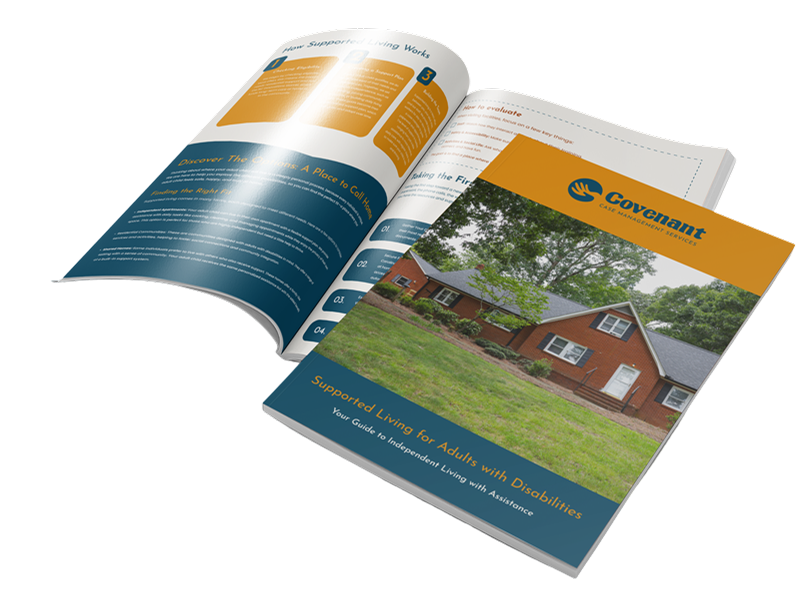
Download Your FREE Supported Living Guide!

Direct Support
Professionals

Individuals Served
Since 2010
