
How to Find Independent Living Facilities
Get the Guidance You Deserve, Right to Your Inbox
Whether you’re a caregiver, care professional, or individual seeking independence, We aim to keep you informed and inspired. Receive updates on services, events, and stories of hope by signing up to become a part of our email list below.
This page explains how to find independent living facilities in North Carolina and decide if they are a good fit for your adult child. Below are simple steps to show you where to look, what questions to ask, and how to weigh costs, support, and everyday life so you feel more prepared and less overwhelmed.
Step‑by‑Step Guide: How to Find Independent Living Facilities in North Carolina
- Search Online
Start by searching online using phrases like “independent living places in North Carolina” or “best independent living communities near me.” Look at many communities, not just the first few. Use filters for location, price, services, and accessibility to build a strong shortlist.
- Check State and Local Resources
Next, check with the NC Department of Health and Human Services and the Division of Health Service Regulation to confirm communities are licensed. For people with IDD. Licensing and safety rules help protect residents, so this step gives an extra layer of peace of mind.
- What’s Covered Under the NC Innovations Waiver
Some websites share a median monthly cost, but the details matter more. Check what is included in the monthly fee and what costs extra. Programs like NC Special Assistance or disability benefits may help with costs.
Use this quick checklist:
- What is included: meals, housekeeping, transportation, activities
- What extra supports cost more
- Staff training with IDD and behavior needs
- Rules about rate increases and contracts
- Visit and Evaluate Communities
After you narrow down options for the best Independent living, plan in‑person visits. Look at cleanliness, safety features, and how staff talk with residents. Notice if residents seem engaged, relaxed, and respected. Walk the halls, dining area, and any outdoor spaces.
Bring your adult child along whenever possible. Watch how staff speak directly to them and honor their choices. During visits, ask questions such as:
- How many staff are here during the day and at night?
- What medical or emergency support is available?
- Will they live with a roommate or on their own with a support staff?
- How does transportation work for appointments and activities?
- What are the house rules about visitors, quiet hours, and pets?
- How are conflicts or behavior issues handled?
In short, to learn how to find independent living facilities, start with online searches, including terms like “independent facilities near me,” and review trusted directories. Then, use state and local resources, such as disability services and agencies, to narrow options and compare costs, services, and locations. Finally, visit each place in person, talk with staff and residents, and notice how daily life feels to decide if it is a good fit.
Costs, Insurance, and Financial Help in North Carolina
Costs vary by community and by how much support a person needs day-to-day. Some people may qualify for state programs, like NC Special Assistance, or other benefits.
If you’re wondering if insurance pays for independent living facilities, the answer is usually no. Health insurance and Medicaid often cover medical care, not rent or basic independent living costs.
How Covenant Case Management Services Can Help
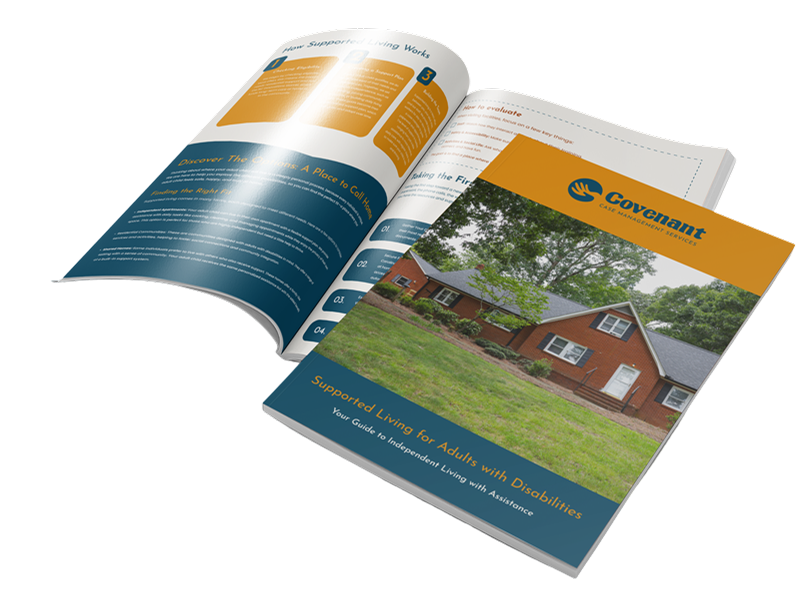
Covenant’s case managers walk alongside you to explore independent living places, understand state and local resources, and coordinate visits and meetings. They listen, advocate, and help weigh options so decisions feel calmer and clearer. For more information on supported living, download the Supported Living Guide.
Questions Families Ask About Finding Independent Living Facilities in North Carolina
What is an independent living facility?
An independent living facility is a community or housing setting where adults live in their own apartment or home. Services vary by facility, so ask what support is included. For adults with intellectual and developmental disabilities (IDD), support often means coaching on cooking, cleaning, and daily skills, plus regular check-ins from staff.
How is independent living different from assisted living?
Independent living means a home or apartment of your own, with support such as coaching on daily skills and regular check-ins. Assisted living offers more help on site, including 24/7 staff on site or on call, meals, medication management, and personal care help. More support does not mean less capability. It can be the right next step for a season. Read our guide to independent living and assisted living.
How do I find independent living facilities in North Carolina?
Search online with phrases such as “independent living places in North Carolina,” then apply filters for location, price, services, and accessibility. Build a shortlist, check state and local resources, and visit your top choices in person. Your case manager can help you narrow the list.
How do I check that a facility is licensed and reputable?
Verify licensing through the NC Department of Health and Human Services and its Division of Health Service Regulation. Then ask each facility for references from current residents and families, and compare what you hear with what you see during your visit.
What should I look for when I tour a facility?
Visit in person and observe cleanliness, safety, and how staff interact with residents. Then ask about:
- Staffing and medical support
- Housing arrangements
- Transportation
- House rules
- How conflicts are resolved
What does independent living cost, and what is included?
Ask what the monthly fee includes and which services cost extra, such as meals, transportation, or added support. Get the fee schedule in writing, and compare the total monthly cost across your shortlist rather than the base rent alone.
Does Medicaid or health insurance pay for independent living?
Health insurance and Medicaid often cover medical care, not rent or basic independent living costs. Programs such as NC Special Assistance may help offset costs for people who qualify, but eligibility depends on the setting and income, so confirm with your county Department of Social Services before you plan around it. Read more about how to pay for independent living.
What if my adult child needs more support than a typical facility offers?
Covenant offers person-centered options: Supported Living Services for living in your own home with daily support, Alternative Family Living (AFL) for living with a trained host family, and Community Living and Support for hands-on help with daily living tasks. Eligible individuals access these through the NC Innovations Waiver or 1915(i) services, depending on the service.
How can a case manager help me find independent living?
A case manager helps you explore options, coordinate visits, and understand which programs your family may qualify for. Covenant Case Management Services provides CARF-accredited case management for individuals with IDD and traumatic brain injuries (TBI) across North Carolina.
How do I get started with Covenant Case Management Services?
Call (704) 780-4552 or contact our team. If you are ready to begin, use the Receive Services form. You can also download our free Supported Living Guide or explore our supported living homes for expert insights and next steps.


Download Your FREE Supported Living Guide!

Direct Support
Professionals

Individuals Served
Since 2010
